

PR Travel Document (PRTD) Canada Guide
A PR travel document (PRTD) is the single-use paper that lets a Canadian permanent resident abroad, who has no valid PR card, board a commercial flight home. You file it online through the IRCC Permanent Residence Portal on form IMM 5444, the consolidated PR card and PRTD form. The 2026 fee is $50 CAD, and since October 9, 2025 it is mandatory with no waiver and no refund. Here is the part most guides skip: the visa office does not just check whether your card lapsed. It assesses whether you still meet the 730-day residency obligation, which means a PRTD refusal is a ruling on your status itself, with appeal rights attached. This page sits under our complete guide to PR card renewal in Canada. It follows IRCC's PRTD process page and Guide 5529.
Last reviewed by Narek Mirzoyan, RCIC # R1005184, on 2026-06-30.
What a PR Travel Document Is
Is a PRTD the same as a PR card?
No. A PRTD is a single-use paper document issued by a Canadian visa office abroad, good for one trip back to Canada. A PR card is the wallet-sized plastic card issued inside Canada that proves status for five years. The two are not interchangeable, and you cannot apply for the card from outside Canada. Once a PRTD gets you home, you renew the card through the regular inside-Canada process. IRCC sets out the distinction on its PRTD overview page.
The reason the document exists is narrow and practical. A commercial carrier is not permitted to board a permanent resident bound for Canada without proof of status. If your card is expired, lost, or was never issued, no airline will let you on the plane. The PRTD is the government-verified substitute. You get back, then you sort out the card. For the broader picture of status versus the card itself, the PR card renewal in Canada pillar covers it in full.
Who Needs a PRTD in 2026
Who is this document for?
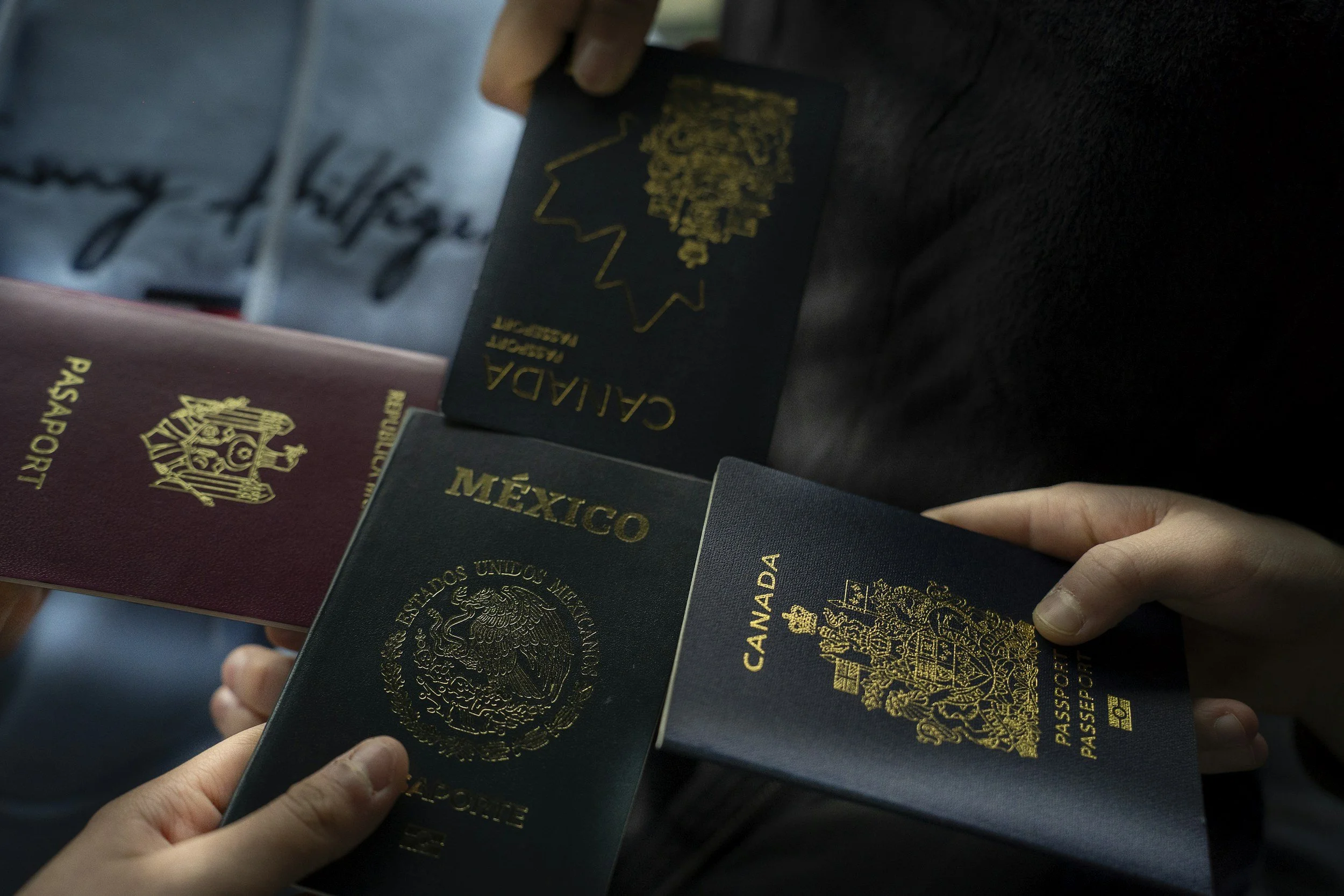
You need a PRTD if you are a Canadian permanent resident, you are currently outside Canada, and you do not have a valid PR card with you. The common situations are an expired card discovered while abroad, a card lost or stolen overseas, and a PR who never received a first card after landing and then left the country. The document covers the single moment of travel back to Canada.
You do not need one if you hold a valid PR card, and you do not need one as a Canadian citizen, since citizens travel on a Canadian passport. A frequent and expensive mistake is checking the card's expiry date only after the ticket is booked. I have helped many clients fix this from abroad, and it is always slower and costlier than catching it before departure. If international travel is coming up, confirm your card is valid the day you book.
What happens if you try to board without one?
The airline runs a pre-flight check against IRCC carrier-messaging systems at check-in. If the system does not return a valid PR card or a valid PRTD, the gate agent refuses boarding, and the ticket is often non-refundable. The rule is set out in IRCC's instructions to carriers and is enforced at every commercial departure point worldwide.
The Internal Logic of an IRCC Officer
What is the officer actually deciding?
This is the misunderstanding that costs PRs their status. A PRTD application looks like a request for a travel paper. To the visa officer, it is a fresh assessment of whether you still meet the residency obligation in section 28 of IRPA. The rule is 730 days of physical presence in Canada in the five years before the application. The officer is not rubber-stamping a lapsed card. They are deciding, on today's evidence, whether you are still a permanent resident in compliance.
That reframing changes how you should prepare. The day-count is the case, not a formality behind it. Three categories of time abroad can still count toward the 730 days, and the full mechanics live in our residency obligation 730-day rule guide:
Accompanying a Canadian-citizen spouse or common-law partner abroad. Days living together outside Canada count.
Full-time work abroad for a Canadian business or the public service. The posting must meet IRCC's definition of a Canadian business, and that bar is higher than most assignments clear.
Accompanying a PR parent abroad, while you are a minor. Limited to the accompanying child's own count.
How the officer reads your evidence
The officer compares your declared days against the travel history IRCC and CBSA already hold. A clean declaration that matches the record moves. A declared total that conflicts with the entry-and-exit history, or that cannot be evidenced across the full five years, draws scrutiny. In my consultations, the single most common day-count error is forgetting short trips to the United States, which CBSA already has on record. The officer sees the gap before you do.
If you genuinely fall short of 730 days, the file does not automatically end your status. The officer can still issue a PRTD on humanitarian and compassionate (H&C) grounds, a discretionary review that weighs your ties to Canada, the reasons for the absence, the hardship of losing PR, and the best interests of any Canadian-citizen children. That is the same H&C jurisdiction the Immigration Appeal Division applies on appeal, which is why the framing of the absence matters from the first submission.

Book your PRTD review with Mirzoyan Immigration Services
Reach a Licensed Immigration consultant Today
Book a free 15-minute FREE assessment call, or call 1-888-636-2122.
Every consultation is with Narek Mirzoyan, RCIC # R1005184, or Vahe Mirzoyan, RCIC # R514223. Not an intake coordinator.
Where You File: PR Portal or Paper at a VAC
What is the primary channel in 2026?
The primary route is online through the IRCC Permanent Residence Portal. You create an account, complete IMM 5444 inside the portal, upload your supporting documents as PDFs, and pay the $50 fee by credit card. IRCC then routes the file to the visa office responsible for your country of residence. The portal has replaced mailed paper submissions for almost every PRTD applicant.
Paper filing through a Visa Application Centre survives only where accessibility makes online filing impossible: a disability that prevents portal use, no reliable internet in your country, or a documented technical barrier. If you qualify, you assemble a paper IMM 5444 and submit it through the VAC that serves your country, which forwards it to the responsible visa office. The channel choice is not cosmetic. Online filing speeds receipt confirmation, fee processing, and document requests, while paper adds courier transit on both ends and can cost two to four weeks at the start of a file.
Documents and IMM 5444, Step by Step
What is in the core document set?
The standard package is the completed IMM 5444, two passport-style photos meeting IRCC photo specs, a copy of your valid passport biographical page, a copy of your most recent PR card even if expired, a copy of your Confirmation of Permanent Residence (COPR or IMM 1000), proof of your days in Canada across the last five years, and proof the $50 fee was paid. The day-count proof is the part that decides the file: CBSA travel history, tax returns, Notices of Assessment, Canadian employment records, leases, and utility bills, weighed against your passport stamps.
How long does the form take, and what triggers a return?
Budget three to four hours for a first-time applicant who has the documents organized, with most of that time on the residency section where you list every entry to and exit from Canada in the past five years. The most common returned-application errors are an unsigned declaration, missing photos, photos that fail IRCC specs, no proof of the fee paid, and an expired passport copy. A returned application restarts the clock, which is painful when a flight is booked. Review every page against a printed checklist before you submit, rather than scanning the form on a phone the night before.
The PR Portal also returns files for reasons that appear nowhere on the form instructions. Non-ASCII characters in uploaded file names, such as apostrophes, accents, or non-Latin script, can fail the upload silently. PDFs compressed below a few megabytes by third-party tools that strip embedded fonts can be rejected. Long upload sessions can time out and drop a partial file. None of these is announced in advance, and each one can cost a returned file at the worst possible moment.
The PRTD Fee and the October 9 2025 Rule
How much does the PRTD cost, and what changed?
The PRTD fee in 2026 is $50 CAD, paid through the IRCC online payment system inside the PR Portal, and the visa office will not begin review until payment is confirmed. What changed is the discretion around it. Effective October 9, 2025, the fee became a hard rule with no waiver, no exemption, and no refund. Before that date, officers had narrow discretion to waive the fee in compassionate cases. That discretion is gone.
What this means in practice is concrete. Every PRTD applicant in 2026 budgets the fee up front, regardless of circumstance. If the application is refused, the $50 is not returned. If you withdraw before a decision, the $50 is not returned. Each family member who needs a PRTD files a separate IMM 5444 and pays a separate $50, so a family of four pays $200 in government fees. The PRTD fee and the later PR card renewal fee are also separate charges: you pay $50 abroad to get home, then another $50 inside Canada to renew the card. Keep both receipts. For the full fee picture across the PR card process, see our PR card renewal fee guide.
Processing Times by Visa Office
Why does processing time vary so much?
There is no single global PRTD target. Caseload, staffing, and intake policy differ at every Canadian visa office abroad, so the same file decided in days at one office can take several weeks at another. A PRTD routed to a high-volume office moves on that office's queue, not on a national clock. The variance shows in the IRCC processing times tool through the visa-office drop-down. As a licensed RCIC, I have seen near-identical files come back in two weeks from one office and many weeks from another, so knowing your office and its current throughput is the single biggest planning input.
Book around the longer end, not the average. The processing tool reports a percentile figure, which means a share of applications finish later than the posted number. Booking a non-refundable ticket against the average, then learning the office is running well past it, is an avoidable and expensive lesson. If travel is genuinely urgent, IRCC runs urgent PRTD handling for narrow documented emergencies, and the request needs evidence on day one rather than a note in the file.
The Land-Border Option for an Expired Card
Can CBSA turn you away at the land border?
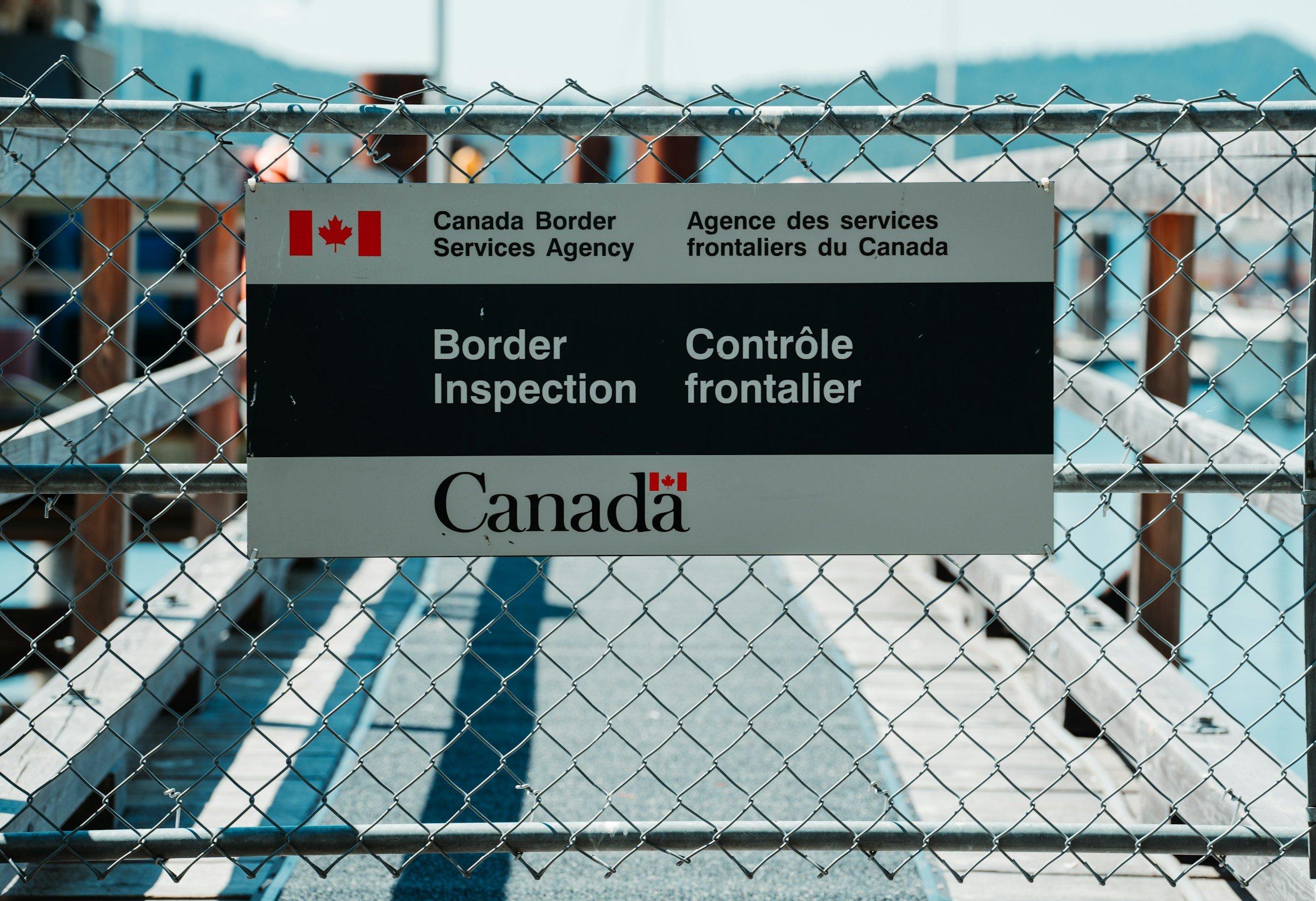
No. A confirmed permanent resident has a right to enter Canada at a land port of entry, and CBSA cannot refuse entry for an expired PR card alone. The CBSA guidance on PR entry confirms this. The result is a real option the carrier rule cannot touch: a PR who can reach a Canada-US land crossing by road may drive or bus in without a PRTD, because the pre-boarding carrier check applies only to commercial flights, buses, trains, and ships bound directly for Canada.
When the land border helps, and when it does not
The option is geographic, not universal. It helps when you are in the continental US or Mexico and can reach a crossing by road, or when you can fly into a US gateway near a crossing, since a flight to a US city does not run the IRCC carrier check that a Canada-bound flight does. It does not help if you are overseas and have to fly, and it does not help if you lack the US visa needed to transit through the United States in the first place.
There is also a residency-obligation consideration that decides this for borderline files. If your day-count is clean, the land border is straightforward, and the officer verifies status from your passport, expired card, and COPR. If you may be short on days, weigh the routes carefully. At the border, an officer who has a residency concern can issue a section 44 report, a written referral for a residency review, and that report is harder to contest than a PRTD refusal decided in writing with full appeal rights. You keep PR status until a final decision on any report, but on a borderline count it is often better to let the visa office rule on the PRTD, where the process and the appeal path are clearer.
Red Flags and Procedural Fairness Letters (PFL)
What triggers an officer to flag a PRTD file?
A Procedural Fairness Letter (PFL) is the officer's written notice that something in the file looks like it will sink it, with a short window to respond before a decision. On PRTD applications, three patterns trigger one most often. Each names a specific failure mode, not a vague warning.
A declared day-count that conflicts with the travel record. The officer cross-checks your declared days against CBSA entry-and-exit data and your passport stamps. A total that does not reconcile, most often from forgotten short trips to the US, reads as either an error or a concealment, and the officer sends a PFL asking you to account for the discrepancy. The failure is not the absence itself. It is the mismatch between what you declared and what the record shows.
A residency shortfall presented without an H&C case. If the day-count falls below 730 and the file offers no explanation, no exception evidence, and no humanitarian and compassionate submission, the officer has nothing to weigh against the breach. The PFL invites you to respond, but a file that arrives with the H&C factors already built in, the ties to Canada, the reasons for the absence, the hardship, gives the officer a basis to exercise discretion rather than refuse.
A claimed exception with thin supporting documents. Relying on the Canadian-business work exception without the employer letter, the contract, the pay records, and the corporate structure showing the Canadian parent relationship invites a PFL, because the exception is the kind of claim officers probe hardest. Asserting the exception is not the same as proving it, and an unsupported claim is treated as no claim at all.
What a refusal actually is, and your appeal right
This is the heart of the matter. A PRTD refusal is a residency-obligation determination, not a simple paperwork rejection. Because it is a determination on your status, it carries a statutory appeal right. You have 60 days from receiving the written decision and reasons to file a Notice of Appeal with the Immigration Appeal Division under subsection 63(4) of IRPA. Your PR status stays active while the IAD decides. Miss the 60 days, and the refusal becomes final and your status ends. On appeal, the onus is on you to show the determination was wrong in law, or that the IAD should grant relief on H&C grounds.
Speak with an RCIC at Mirzoyan Immigration Services before the 60-day clock runs
A PRTD appeal runs on a hard deadline and needs strong evidence on day one. Mirzoyan Immigration Services represents clients at the Immigration Appeal Division on residency-obligation appeals. If a visa office has refused your PRTD, book a PR card renewal and appeal consultation before the 60 days run out. The consultant who builds your appeal is the consultant who answers your questions through it.

Book a consultation before the 60 day clock runs out
Reach a Licensed Immigration consultant Today
Book a free 15-minute FREE assessment call, or call 1-888-636-2122.
Every consultation is with Narek Mirzoyan, RCIC # R1005184, or Vahe Mirzoyan, RCIC # R514223. Not an intake coordinator.
Key Takeaways
A PRTD is a single-use travel document for a permanent resident outside Canada without a valid PR card, filed on IMM 5444 through the IRCC PR Portal and decided by the visa office for your country.
The visa office assesses the 730-day residency obligation before issuing, so a PRTD application is a status assessment, not a paperwork formality.
The fee is $50 CAD per applicant, mandatory since October 9 2025 with no waiver, no exemption, and no refund.
A PRTD refusal is a residency-obligation determination that carries a 60-day right of appeal to the Immigration Appeal Division; PR status holds while the appeal runs, but missing the 60 days ends it.
A commercial carrier will not board a PR without a valid card or a PRTD, yet CBSA cannot refuse a PR at a land border, which opens a documented drive-in option when geography allows.
Mirzoyan Immigration Services reviews PRTD packages before submission and represents clients at the Immigration Appeal Division when a visa office refuses on residency grounds.
Frequently asked questions
-
A PRTD is a single-use travel document that lets a permanent resident return to Canada when their PR card is expired, lost, stolen, or was never issued. You need one to board a commercial plane, train, bus, or ship to Canada when you do not hold a valid PR card. It covers the single trip back and nothing more.
-
You apply online through the IRCC Permanent Residence Portal using IMM 5444. IRCC routes your file to the visa office responsible for the country where you are located, not to a processing centre inside Canada. Paper filing through a Visa Application Centre is available only when accessibility makes online filing impossible.
-
The fee is $50 CAD per applicant. Since October 9 2025 it is mandatory, with no waiver, no exemption, and no refund. If your application is refused or you withdraw it, the $50 is not returned. Each family member files a separate IMM 5444 and pays a separate $50.
-
A Canadian border officer cannot refuse entry to a confirmed permanent resident at a land port of entry, even with an expired PR card. That right does not extend to commercial carriers, which will not board you on a plane, bus, train, or ship without a valid card or a PRTD. The land-border option works only when geography lets you reach a crossing by road.
-
A PRTD refusal is a residency-obligation determination. You have 60 days from receiving the written decision to file a Notice of Appeal at the Immigration Appeal Division. Your PR status stays active while the appeal is decided. Miss the 60 days and the decision becomes final, ending your status. Appeal mechanics are covered in the residency-obligation guide.
Conclusion
A PRTD is the bridge between a permanent resident abroad and a renewed PR card inside Canada. The visa office wants three things on the first submission: the right form, a day-count that reconciles with the record, and the evidence to back it. Treat the application as the status assessment it actually is, and the file moves. Treat it as a paperwork errand, and a thin day-count can turn a travel document into a residency refusal you then have 60 days to appeal. If you are sitting abroad with an expired card, or a visa office has already refused your PRTD, book a PR card renewal and PRTD consultation, or call 1-888-636-2122 with Mirzoyan Immigration Services.
This article is general information about Canadian immigration procedures, not legal advice. Immigration rules change. Always confirm current requirements with IRCC or a Regulated Canadian Immigration Consultant licensed by the College of Immigration and Citizenship Consultants. For advice on your specific case, book a consultation with Mirzoyan Immigration Services.