

Study Permit Canada
A study permit Canada is the IRCC document that lets a foreign national study at a Designated Learning Institution when the program runs longer than six months. Mirzoyan Immigration prepares and submits study permit applications for clients across Canada, in person, online, or by phone. Every file is built and filed by a licensed RCIC: Narek Mirzoyan, RCIC # R1005184, or Vahe Mirzoyan, RCIC # R514223., The Provincial Attestation Letter, the proof-of-funds position, and a credible study plan decide more outcomes than anything else on the file. This page covers who needs a study permit, eligibility, the IRCC process, the 2026 fees and timelines, and the document patterns behind most refusals.
Last reviewed by Narek Mirzoyan, RCIC # R1005184, on 2026-06-25.
Who Is The Study Permit For
A study permit is required when a foreign national is accepted to a Designated Learning Institution (DLI) for a program longer than six months. The right pathway depends on your study level, your school, and where you apply from. The wrong document set at intake is a known cause of a returned or refused file. For the full reference, read our complete guide to study permits in Canada.
International students starting a new program
If you are a foreign national accepted to a DLI for a program longer than six months, you need a study permit before you arrive. You apply from outside Canada on form IMM 1294E through the IRCC Secure Account. Most post-secondary applicants outside Quebec also need a Provincial Attestation Letter. Mirzoyan Immigration assembles the full package: the Letter of Acceptance review, the PAL or CAQ check, proof of funds, and the application itself.
Graduate students at public universities
Master's and PhD students enrolled at public DLIs no longer need a Provincial Attestation Letter as of January 1, 2026. The exemption does not extend to graduate certificates, college diplomas, or private DLIs. The phrasing trips applicants who read "graduate students are exempt" and skip a PAL their credential level still requires. Mirzoyan Immigration confirms the exemption against the credential level on the Letter of Acceptance before filing.
Students applying or extending from inside Canada
You can apply from inside Canada only if you hold a current work or study permit, are the spouse or dependent of a permit holder, completed prerequisite courses at a Canadian DLI, or are a minor completing an authorized stay. Visitor-visa holders generally cannot convert to a study permit from inside Canada. The pandemic-era pilot that allowed it ended on March 31, 2025. For a current permit holder staying on to keep studying, the route is a study permit extension; for a parent enrolling a child, see study permits for minor children.
The table below maps the three common starting profiles to the document set each one carries. It is a reference, not a substitute for a file-specific assessment.
| Applicant profile | Attestation document required | Where it comes from |
|---|---|---|
| Undergraduate or college student outside Quebec | Provincial Attestation Letter (PAL) | The province where the DLI sits, issued through the institution |
| Master's or PhD student at a public DLI outside Quebec | Exempt as of January 1, 2026 | No PAL required; verify the credential level on the Letter of Acceptance |
| Graduate-certificate or college-diploma student outside Quebec | Provincial Attestation Letter (PAL) | The province where the DLI sits; the master's/PhD exemption does not apply |
| Any level at a DLI in Quebec | Certificat d'acceptation du Québec (CAQ) | Ministère de l'Immigration, de la Francisation et de l'Intégration (MIFI) |
Eligibility Requirements at a Glance
You qualify for a study permit when you meet IRCC's four-part framework. You need an acceptance at a school on the official Designated Learning Institution list, proof of funds, no inadmissibility, and a credible intent to leave at the end of your authorized stay. A file that cannot demonstrate all four is refused.
Accepted at a DLI. A Letter of Acceptance from a school on the official list, with the DLI number matching the list entry. Verify the DLI number before you apply, not after.
Proof of sufficient funds. First-year tuition plus living expenses for yourself and any accompanying family, set by a dynamic LICO model outside Quebec since January 27, 2026, and by a separate MIFI table in Quebec.
No inadmissibility. No criminal, medical, or security inadmissibility. A medical exam is required for stays over six months, for certain designated countries, and for programs leading to healthcare, childcare, or education work.
Intent to leave at end of stay. Credible ties to your home country and a study plan that connects your program, your career, and your reason for studying in Canada. This is the threshold that drives the largest share of refusals.
How the Study Permit Process Works
The process moves from document assembly to a decision, then to permit issuance at the port of entry. The stages below are the IRCC sequence. The practitioner work runs alongside, not after.
-
Verify the Letter of Acceptance, the PAL or CAQ if required, and proof of funds. You gather the Letter of Acceptance from your DLI and request the PAL through your institution.
-
Set up the account with a Sign-In Partner or GCKey. You complete the personal-information and program fields online.
-
This is the Application for a Study Permit Made Outside of Canada. You provide your DLI and program details, funds, travel history, and study plan.
-
The study permit fee is $150 and biometrics is $85. You attach all supporting documents, pay online, and submit to receive an Acknowledgement of Receipt.
-
IRCC issues a Biometric Instruction Letter after submission. You attend a Visa Application Centre within 30 days, then complete a panel-physician medical exam where one is required.
-
An officer reviews eligibility, runs background checks, and decides. You monitor the IRCC Secure Account portal and respond to any Procedural Fairness Letter within the stated window.
-
On approval, IRCC issues a letter of introduction. A Canada Border Services Agency officer issues the actual study permit when you arrive in Canada.
Study Permit Fees and Processing Times
Federal government fees for a single applicant total roughly $235: $150 for the study permit application and $85 for biometrics, paid online through the IRCC Secure Account. Visa Application Centre service fees are separate and vary by country. Mirzoyan Immigration's legal fee is separate again and is a flat fee quoted after the initial consultation, published on our immigration consultant cost page.
The 2026 rulebook is the operational reality behind a longer assembly timeline. IRCC's 2026 international student cap sets 309,670 study permit application spaces for applicants who require a Provincial Attestation Letter, and IRCC plans to issue up to 408,000 study permits in total, roughly 7% fewer than the 2025 target of 437,000. The Student Direct Stream closed on November 8, 2024, so every applicant now files under the slower Regular stream. Proof of funds moved to a dynamic Low-Income Cut-Off model on January 27, 2026, so the dollar figure can shift while a file is open. Fewer permits, a slower stream, and a moving financial target are why a 2026 application takes longer to assemble than one filed eighteen months ago.
The proof-of-funds figure is not a single number. It depends on family size and on whether you study inside or outside Quebec. The breakdown below shows what each cost component covers.
Processing times vary sharply by visa office, country, and file completeness. The Student Direct Stream closed on November 8, 2024, so every applicant now files under the Regular stream, which is slower on average than the old four-to-six-week SDS track. The only reliable figure is the IRCC processing-times tool, checked for your visa office on the day you submit.
| Component | Amount (CAD) | Notes |
|---|---|---|
| Study permit application fee | $150 | Paid at submission. Not refunded if the application is refused. |
| Biometrics fee | $85 | Biometric data is valid 10 years and reused across applications in that window. |
| VAC service fee | Varies by country | Paid directly to the Visa Application Centre. Not listed on the IRCC fee schedule. |
| Proof of funds, single applicant outside Quebec | Dynamic LICO figure | Set by a dynamic Low-Income Cut-Off model since January 27, 2026. Plus first-year tuition. |
| Proof of funds, single applicant in Quebec | Separate MIFI figure | Quebec sets a higher figure under the Canada-Quebec Accord. Plus first-year tuition. |
| Mirzoyan Immigration legal fee | Flat fee | Quoted after the initial consultation. See our flat-fee structure. |
Ready to apply?
Reach a Licensed Immigration consultant Today
Book a free 15-minute FREE assessment call, or call 1-888-636-2122.
Every consultation is with Narek Mirzoyan, RCIC # R1005184, or Vahe Mirzoyan, RCIC # R514223. Not an intake coordinator.
Why a Licensed RCIC Matters
A Regulated Canadian Immigration Consultant is the only non-lawyer practitioner IRCC authorizes to represent applicants. The licensing body is the College of Immigration and Citizenship Consultants. The College sets the Code of Professional Conduct, runs a public complaints process, and maintains the public register of every active license. An RCIC operates inside that framework. An unlicensed "consultant" does not. If your file is mishandled by an unlicensed practitioner, you have no recourse through the CICC, and IRCC treats the application as if you represented yourself.
The license does not guarantee an outcome. What it guarantees is accountability. A licensed RCIC carries professional liability insurance, signs a written retainer that sets fees and scope, and is bound to the conduct code on every file. This matters in the study-permit space, where public reviews routinely flag unlicensed agents charging service fees of $9,000 or more on top of the roughly $235 in government cost. Verify any practitioner before you sign: search the CICC public register at college-ic.ca and confirm the license is active.

Why Clients Choose Mirzoyan Immigration
One on One Advisory. When you hire Mirzoyan Immigration, your questions go directly to a licensed practitioner. Not an intake coordinator. Not a paralegal assistant. The person who reviews your document is the person who notarizes it and answers your questions about it.
The Mirzoyan Methodology. Every file moves through six stages before IRCC sees it: Risk diagnosis, Evidence mapping, document verification, consistency audit, submission; and IRCC response management. Each stage catches a specific officer-flag pattern.
Service in English, Russian, and Armenian.
A transparent flat fee, never billed by the hour.
Canada-wide service, in person, online, or by phone.
Read more on our Google Business Profile, rated 5.0 from 261 reviews by Mirzoyan Immigration clients.
Common Document Rejection Triggers in Study Permit Applications
The IRCC checklist tells the reader what documents to submit. It does not tell the reader where those documents trip real applicants. The patterns below cause most returns and refusals on study permit files. Each names a specific failure mode the document-verification and consistency-audit stages of The Mirzoyan Methodology catch before submission.
Proof-of-funds sourcing and seasoning failures. A lump-sum deposit that lands in the applicant's account one to three weeks before submission reads as a borrowed bridge loan. The GCMS note frequently cites "source of funds unclear." A fixed deposit locked with no early-withdrawal clause is counted as inaccessible, because the funds cannot reach the student soon after arrival. A third-party wire with no sponsor letter is counted as unverified. IRCC publishes a four-month bank-statement rule, yet officers in practice want funds seasoned across closer to six months, with every large transfer documented by a sponsor letter and the sponsor's own statements. The full standard is in our guide to proof of funds for a study permit.
Provincial Attestation Letter omission or wrong year. If a PAL is required for the category and the file is submitted without one, IRCC returns the application without processing it and refunds the fee, costing weeks of timeline. A 2025 PAL submitted with an application filed in early 2026 is the wrong-year version: a 2026 PAL expires December 31, 2026, and a 2025 PAL is no longer valid as of January 1, 2026. PALs cannot be reissued, so an error on the PAL is addressed by a letter of explanation, not a corrected reprint. Graduate-certificate applicants who misread the master's and PhD exemption are the most common omission pattern. The detail is in our guide to the Provincial Attestation Letter.
Letter of Acceptance and DLI number mismatches. A study permit cannot be issued for a school not on the official DLI list, and that refusal cannot be cured by transferring the application; the applicant reapplies with a new Letter of Acceptance and a non-refundable second fee. Where the school is a DLI, a single wrong digit in the DLI number on the Letter of Acceptance is, in practice, an instant refusal, because officers verify the number against the list at assessment. The number is the letter O followed by 11 digits, and the leading O is not a province code, a point that trips applicants who assume an O-prefix means an Ontario school.
Weak ties, study-plan gaps, and the intent-to-leave threshold. In 2024 IRCC data, travel-history concerns were cited in 76% of study permit refusals, unclear purpose of visit in 47.3%, and no significant family ties outside Canada in 7.3%. A study plan that does not connect the program choice, the career trajectory, and the reason for studying in Canada reads as a weak intent-to-leave position under IRPR 216(1). Separately, concealing a prior visa refusal on the application is the most common trigger for a misrepresentation finding under IRPA section 40, which carries a five-year inadmissibility, not a simple refusal. The full taxonomy is in our guide to study permit refusal reasons and how to reapply.

Not sure which stream fits your goals
Speak with a licensed RCIC. We will map your situation against the available pathway and point you to the option that fits your facts.
Read Our Complete Guide to Study Permits
For a longer reference on every stage of the application, read our complete guide to study permits in Canada. The guide walks through the 2026 policy changes, the three core documents, the step-by-step application, the port-of-entry process, and what each IRCC portal status means. It is the informational companion to this service page. Current permit holders staying on to work part-time should also read the rules on international student work hours.
Study Permit Help Across the GTA
Mirzoyan Immigration prepares study permit applications for clients across the Greater Toronto Area, in person, online, or by phone. Each city page below carries the local detail relevant to students and families in that municipality.
Clients outside the GTA work with Mirzoyan Immigration by secure video consultation.
Frequently Asked Questions
-
The federal government fee is $150 for the study permit and $85 for biometrics, paid online through the IRCC Secure Account. If you give biometrics at a Visa Application Centre abroad, a separate VAC service fee applies that varies by country. The total government cost for a single applicant is roughly $235 plus that VAC fee. Mirzoyan Immigration charges a separate flat legal fee quoted after the initial consultation.
-
Processing times vary sharply by visa office, country, and the completeness of the file. The Student Direct Stream closed on November 8, 2024, so every applicant now files under the Regular stream, which is slower on average than the old four-to-six-week SDS track. The only reliable figure is the IRCC processing-times tool, checked for your visa office on the day you submit.
-
Most post-secondary applicants outside Quebec need a Provincial Attestation Letter (PAL) issued by the province where the school sits. Master's and PhD students at public DLIs are exempt as of January 1, 2026, along with K-12 and certain other categories. Quebec applicants need a CAQ from MIFI instead. If a PAL is required and missing, IRCC returns the application without processing it and refunds the fee.
-
You must show first-year tuition plus living expenses for yourself and any accompanying family. The living-expense figure for a single applicant outside Quebec moved to a dynamic Low-Income Cut-Off model on January 27, 2026, so the dollar amount can shift while your file is open. Quebec runs a separate, higher MIFI table. Confirm the current figure on the IRCC financial-support page on the day you start your application.
-
In 2024 IRCC data, travel-history concerns were cited in 76% of study permit refusals, insufficient financial assets in 53.3%, and unclear purpose of visit in 47.3%. Most refusal letters cite more than one concern. A simple refusal under IRPR 216(1) lets you reapply with a stronger package. A misrepresentation finding under IRPA section 40 is different and carries a five-year inadmissibility. Read the refusal letter for the section 40 reference before deciding what to do next.
-
Yes. Mirzoyan Immigration serves clients across Canada and worldwide through secure video consultations on Zoom or Microsoft Teams. Documents are exchanged through an encrypted client portal. Clients who prefer to meet in person can book an in-person appointment. Service in English, Russian, and Armenian is available for every consultation.
Trusted Toronto Immigration Consultants
Trusted Toronto immigration team helping individuals and families with spousal sponsorships, work permits, visitor visas, and permanent residence.
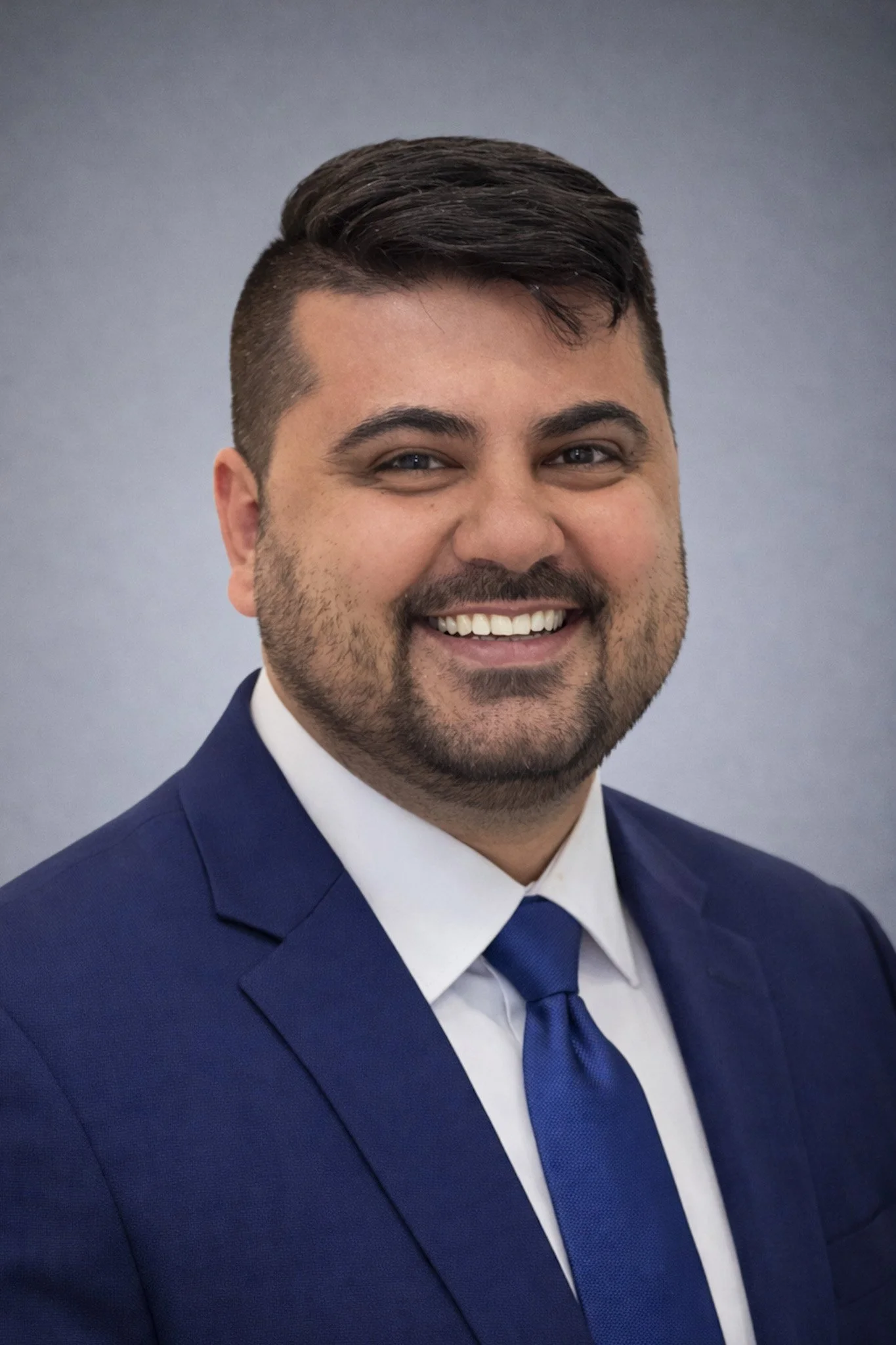
Narek Mirzoyan
Vahe Mirzoyan
Narek Mirzoyan is a Regulated Canadian Immigration Consultant (RCIC#R1005184) in good standing with the College of Immigration and Citizenship Consultants, a proud member of the Canadian Association Of Professional Immigration Consultants (CAPIC), a Licensed Paralegal (P12490) with the Law Society of Ontario, the founder of Mirzoyan Canadian Immigration Services Inc. and an immigrated to Canada himself. That experience shapes how he explains each step to clients.

Vahe Mirzoyan is a seasoned Regulated Canadian Immigration Consultant (RCIC#R514223) with over a decade of dedicated experience working with individuals, corporations, and institutions on the full spectrum of Canadian immigration law. With a career built on precision, integrity, and an unwavering commitment to client success, Vahe has established himself as a trusted authority in Canadian immigration.
Start Your Study Permit File Today
A complete, well-sourced study permit file is the difference between an approval and a refusal that costs a semester. The 2026 cap means fewer permits will be issued than in 2025, the Regular stream is slower than the closed SDS track, and the dynamic LICO model means your proof-of-funds figure may shift between today and your submission date. The applicant who starts late is the applicant who files into a tighter cap.
Book a consultation with our Canadian immigration representatives, or call 1-888-636-2122. Every consultation is with Narek Mirzoyan, RCIC # R1005184, or Vahe Mirzoyan, RCIC # R514223. Your file will not be routed through an intake desk.
This page is general information about the Canadian study permit and does not constitute legal or immigration advice. Individual circumstances vary, and IRCC and MIFI rules can change without notice. For advice tailored to your situation, book a consultation with a licensed Regulated Canadian Immigration Consultant.