

Post-Graduation Work Permit in Canada
A post-graduation work permit in Canada is the open work permit that lets a graduate of an eligible Canadian program work for almost any employer after finishing studies. Mirzoyan Immigration prepares and files post-graduation work permit applications for graduates across Canada, in person, online, or by phone. Every file is built and submitted by a licensed RCIC: Narek Mirzoyan, RCIC # R1005184, or Vahe Mirzoyan, RCIC # R514223. This permit is issued once per lifetime, so the timing of the application matters as much as the eligibility. This page covers who qualifies, the field-of-study rule, the 180-day window, the IRCC process, the fees, and the date and status errors that get files refused.
Last reviewed by Narek Mirzoyan, RCIC # R1005184, on 2026-06-30.
Who a Post-Graduation Work Permit Is For
A post-graduation work permit is for the international graduate of an eligible Canadian designated learning institution who wants to stay and work after the program ends. It is an open permit, so it is not tied to one employer. It is not a renewal of a study permit, and it is not automatic. Eligibility turns on the school, the program, the credential level, and, for most college graduates, the field of study. The profiles below are the ones that fit this permit.
Graduates of an Eligible College or University Program
To qualify, the graduate must have completed an eligible program at a designated learning institution, full-time during the academic sessions, with the program at least eight months long. A bachelor's, master's, or doctoral degree from an eligible university clears the field-of-study screen on its own. A college diploma, certificate, or graduate certificate clears it only when the field of study links to an eligible occupation. Mirzoyan Immigration confirms the program, the credential, and the field against the current IRCC rules before the application is filed.
Graduates Sequencing the PGWP Against a PR Plan
The PGWP is the bridge most international graduates use to reach permanent residence. Canadian work experience on a PGWP can count toward the Canadian Experience Class and several provincial streams, which is why the permit is a runway, not a destination. The strategic question is which credential to attach the one-time permit to, and when to file. The graduate-to-PR sequence is covered in depth in our Canadian Experience Class pathway for PGWP holders. Mirzoyan Immigration plans the PGWP application around the permanent residence target, not in isolation.
Graduates Whose Study Permit Is About to Expire
Timing is the trap that ends more PGWP plans than eligibility does. A graduate whose study permit expires soon after final marks has a narrow set of moves, and the wrong one means a loss of status. The applicant may need to apply for the PGWP before the study permit lapses, or restore status inside a limited window if it already has. Mirzoyan Immigration reads the study-permit expiry against the program-completion date first, because that single comparison decides which option is still open.
The table below sets the PGWP beside the two permits graduates most often confuse it with. Your situation, not your preference, places you in one.
| Feature | Post-graduation work permit (PGWP) | Study permit extension | Spouse / bridging open work permit |
|---|---|---|---|
| Who it is for | Graduate of an eligible program who has finished studies | Student continuing or adding a Canadian program | Spouse of a permit holder, or PR applicant in queue |
| Employer tie | Open: almost any employer | Study only; limited on-campus or off-campus work hours | Open: almost any employer |
| How many you can hold | One per lifetime | No lifetime cap; renew as long as you study | No lifetime cap; tied to the qualifying relationship or PR file |
| Length | Tied to program length, 8 months up to 3 years | Tied to the new program's length | Tied to the principal permit or PR processing |
| Application deadline | 180 days from confirmed program completion | Before the current study permit expires | While the qualifying status is valid |
Eligibility Requirements at a Glance
A PGWP file clears intake when the graduate, the program, and the timing all meet IRCC's rules. The graduate must have finished an eligible program at a designated learning institution that qualifies for the PGWP. The program must have been full-time and at least eight months long. For most college graduates the field of study must link to an eligible occupation. The criteria below are the gates every applicant passes.
Eligible institution and program. The school is a designated learning institution whose program is PGWP-eligible. Not every DLI program qualifies, and a private-college curriculum-licensing arrangement can disqualify an otherwise-eligible-looking program.
Credential and field of study. A university bachelor's, master's, or doctoral degree qualifies without the field-of-study screen. A college credential qualifies only when the field links to an eligible occupation, under the rule in force since November 1, 2024.
Program length. The program ran at least eight months, completed full-time during the academic sessions, with a recognized exception for a final part-time term.
The 180-day window. The application is filed within 180 days of the date the school confirms completion, with a valid study permit held at some point inside that window.
One per lifetime. No prior PGWP has been issued. IRCC grants the post-graduation work permit only once.
Valid temporary status. The applicant holds valid status at the time of application, or applies to restore status within the limited restoration window if status has lapsed.
How the Post-Graduation Work Permit Process Works
The process moves from confirming eligibility to receiving the open permit. The stages below are the 2026 inland sequence, the route most graduates use. The practitioner work runs alongside each stage, not after it.
-
Mirzoyan Immigration confirms the program-completion date, the credential, and the field of study against the current rules, and counts the 180-day window from there. You provide your final transcript and your program-completion or graduation letter.
-
The firm checks whether your study permit is still valid, and whether you can keep working between application and decision. You confirm your current study permit expiry date and any other status you hold.
-
You provide your passport, your completion letter, your transcript, a digital photo, and proof of any prior biometrics. The firm prepares the work permit application and selects the correct PGWP basis.
-
The application is filed online and the fees are paid by credit card through the IRCC online portal. You confirm the details match your study record.
-
If IRCC requires new biometrics, pay the applicable fee and follow the deadline in your biometric instruction letter. Book at an official collection site: a designated Service Canada office in Canada, a Visa Application Centre abroad, or an eligible U.S. Application Support Center. Biometrics already provided for temporary residence may still be valid. Check IRCC’s biometrics instructions before booking.
-
IRCC assesses eligibility and, if approved, issues the PGWP for the period allowed by the program and document-validity rules. You may work full-time while awaiting a decision only if you held a valid study permit when you applied, completed your program, were eligible to work off campus during your studies, and stayed within the permitted hours. Otherwise, wait for work authorization before starting work. If IRCC refuses the application, stop working when notified. See IRCC’s PGWP after-application guidance.
Post-Graduation Work Permit Fees and Processing Times
The current operating picture shapes the numbers below. Canada has reduced study-permit issuance and tightened PGWP eligibility through 2024 and 2025, so the cohort applying in 2026 is filing under stricter program and field-of-study screens than earlier graduates faced. The PGWP is an open work permit, so IRCC charges the $155 work permit processing fee plus the $100 open work permit holder fee, for $255, plus $85 for biometrics where they are required. Mirzoyan Immigration's legal fee is separate, and it is a flat fee quoted after the initial consultation, published on our immigration consultant cost page. Confirm every figure below against the live IRCC schedule before you budget.
The permit length tracks the program length. A program of eight months up to under two years usually yields a permit close to the program length. A program of two years or more usually yields the three-year maximum. IRCC adjusted parts of the PGWP length framework during the 2024 to 2025 policy changes, so confirm the current length rule for your credential rather than relying on the older "matches program length, up to three years" summary.
| Item | Amount (CAD) | Notes |
|---|---|---|
| Work permit processing fee | $155 | Charged on every work permit, open or closed. |
| Open work permit holder fee | $100 | Added because the PGWP is an open permit. |
| Biometrics | $85 | Where required. Many graduates gave biometrics for the study permit and are not charged again. |
| Mirzoyan Immigration legal fee | Flat fee | Quoted after the initial consultation. See our flat-fee structure. |
| Processing standard | Roughly 3 to 5 months (inland) | Varies through the year. Verify on the IRCC processing times tool. |

Ready to file?
Reach a Licensed Immigration consultant Today
Book a free 15-minute FREE assessment call, or call 1-888-636-2122.
Every consultation is with Narek Mirzoyan, RCIC # R1005184, or Vahe Mirzoyan, RCIC # R514223. Not an intake coordinator.
Why a Licensed RCIC Matters
A Regulated Canadian Immigration Consultant is the only non-lawyer practitioner IRCC authorizes to represent applicants. The licensing body is the College of Immigration and Citizenship Consultants, which sets the Code of Professional Conduct, runs a public complaints process, and maintains the public register of every active license. An RCIC operates under that regulatory framework. An unlicensed "consultant" does not. When your file is mishandled by an unlicensed practitioner, you have no recourse through the CICC, and IRCC treats the application as if you represented yourself.
The license does not guarantee an outcome. What it guarantees is accountability. A licensed RCIC carries professional liability insurance, signs a written retainer that sets fees and scope, and is bound to the conduct code on every file. This matters for the PGWP because the permit is one per lifetime, and an error filed by an unlicensed advisor cannot be redone with a second permit. Verify any practitioner before you sign. Search the CICC public register and confirm the license is active.
Why Clients Choose Mirzoyan Immigration
Mirzoyan Immigration is led by Narek Mirzoyan, RCIC # R1005184, and Vahe Mirzoyan, RCIC # R514223, both Paralegals of the Law Society of Ontario. Two frameworks govern every post-graduation work permit file the firm opens.
One on One Advisory. When you hire Mirzoyan Immigration, your questions go directly to a licensed RCIC. Not an intake coordinator. Not a paralegal assistant. The consultant who builds your file is the consultant who answers your messages. That holds from the first call through the IRCC decision and into the permanent residence planning that follows.
The Mirzoyan Methodology. Every file moves through six stages before IRCC sees it: risk diagnosis, evidence mapping, document verification, consistency audit, submission, and IRCC response management. Each stage catches a specific class of officer-flag pattern that returns or refuses PGWP files.
-
The file opens with a structured read of the failure factors in the profile: a study permit that expires inside the window, a college program whose field of study sits at the edge of the eligible list, a private-college arrangement that may disqualify the program, or a graduate who has already used a PGWP.
-
Every claim maps to the document that proves it. The completion claim maps to the transcript and the program-completion letter. The credential claim maps to the diploma or degree. The field-of-study claim maps to the program and the eligible-occupation list. Gaps surface before drafting starts.
-
Each document is checked against the issuing-authority and validity-window rules IRCC enforces but rarely publishes plainly. The completion letter is read for the actual completion date, because that date, not the convocation date, starts the 180-day clock.
-
Every date is cross-checked across the file. The program-completion date, the study-permit expiry, the application date, and the 180-day window are reconciled against one another, because a date mismatch here is the most common reason a PGWP file is refused. This stage catches the sequencing error before submission.
-
The licensed RCIC handling the file authorizes and executes the IRCC submission through the secure account in the format the system silently requires.
-
The firm manages every officer communication that follows submission, and carries the file forward into the Canadian Experience Class and provincial pathways that a PGWP runs toward.
Common Document Rejection Triggers in PGWP Applications
The IRCC checklist tells you what to submit. It does not tell you where those documents trip real applicants. The five patterns below cause most PGWP refusals on files reviewed at the office. Each names a failure mode the consistency-audit and document-verification stages of The Mirzoyan Methodology catch before submission.
A PGWP-ineligible program or institution. Not every program at a designated learning institution qualifies for a PGWP. A program delivered under a private-college curriculum-licensing arrangement, a program below the eight-month length floor, or a program at a school that is a DLI for study but not PGWP-eligible all produce the same result: the graduate studied in good faith and is refused at the PGWP stage. The eligibility of the program is checked before enrollment ideally, and before the application certainly. A refusal here cannot be cured by reapplying, because the program itself does not qualify.
The field-of-study screen for college graduates. Since November 1, 2024, most college and non-degree graduates must have studied in a field tied to an occupation on IRCC's eligible-field-of-study list. The list has been revised since it launched, so a graduate who confirmed eligibility against an early version of the list can be caught by a later revision. A degree graduate is exempt from this screen; a college graduate is not. Reading the wrong version of the list, or assuming a college credential is exempt the way a degree is, is a recurring refusal pattern.
Missing the 180-day window, or miscounting the start date. The 180-day clock starts on the date the institution confirms program completion, which is the date on the completion letter or final transcript, not the convocation date months later. Graduates who wait for the ceremony, or who count from the last exam rather than the official completion confirmation, file late. A late application is refused, and the one-time permit is lost. The completion letter has to be read for the exact date before the clock is counted.
An expired study permit and a lost status position. A graduate must have held a valid study permit at some point during the 180-day window, and must hold valid status when applying or restore it within the limited restoration window. A study permit that expires shortly after final marks, with no other status in place, narrows the options to a few days. A graduate who applies after status has lapsed, without a restoration request, is refused on status grounds even when the underlying PGWP eligibility is clean.
Spending the one-time permit on the wrong credential. The PGWP is issued once per lifetime. A graduate who files for a PGWP after a shorter first program, then completes a master's, cannot get a second PGWP for the master's. The error is not a rejected document; it is a strategic mistake that the application form does not warn against. Sequencing the one-time permit against the credential most likely to support a permanent residence application is a decision made before filing, not after.

Not sure which temporary residence stream fits your goals?
Speak with a licensed RCIC. We will map your situation against the available pathway and point you to the option that fits your facts.
More on the Graduate-to-PR Path
A post-graduation work permit is the runway to permanent residence for most international graduates, and the strategic value of the permit is in where it leads. For the full picture of how PGWP work experience feeds the Canadian Experience Class pathway for graduates, including how the hours count, the bridging-permit timing trap, and what to do if the PGWP expires before permanent residence is approved, read our deep dive on the graduate-to-PR route. Graduates still in studies, or planning the study-to-PGWP sequence from the start, should also read our complete guide to study permits in Canada.
Frequently Asked Questions
How long does a post-graduation work permit take to process in 2026? Inland PGWP applications run roughly 3 to 5 months, though the band varies through the year. You keep full-time work authorization while an inland application is in progress, provided you applied before your study permit expired and you held eligible status when you applied. An application filed from outside Canada runs on the visa-office band for your country. Verify the current estimate on the IRCC processing times tool before you submit.
What does a post-graduation work permit cost in Canada in 2026? The PGWP is an open work permit, so two IRCC fees apply: the 155 dollar work permit processing fee and the 100 dollar open work permit holder fee, for 255 dollars, plus 85 dollars for biometrics if you have not given them before. Mirzoyan Immigration charges a separate flat legal fee, quoted after the initial consultation. See our flat-fee structure for the breakdown.
How long do I have to apply for a PGWP after I finish my program? You have 180 days from the day your final marks or program completion letter confirm you finished. The clock starts when the school confirms completion, not on your convocation date. You must also have held a valid study permit at some point during those 180 days. If your study permit expires inside the window and you have no other status, the safest move is to apply before it expires, not after.
Can I get a second post-graduation work permit? No. The PGWP is one per lifetime. IRCC issues a post-graduation work permit only once, no matter how many additional eligible credentials you later complete. A graduate who used a PGWP after a first program cannot get a second one after a master's. The practical consequence is that the timing of your first PGWP application is a strategic decision, not a formality. Plan it against the credential most likely to support your permanent residence path.
Does my field of study affect my PGWP eligibility? For most college graduates, yes. Since November 1, 2024, graduates of most non-degree programs must have studied in a field linked to an occupation on the IRCC eligible-field-of-study list to qualify for a PGWP. University bachelor's, master's, and doctoral graduates are exempt from the field-of-study screen. The eligible-field list has been revised since it launched, so the rule that applied to an earlier cohort may not apply to yours. Confirm your program against the current list before you rely on it.
Can I work with Mirzoyan Immigration from outside Toronto? Yes. Mirzoyan Immigration serves clients across Canada and worldwide through secure video consultations on Zoom or Microsoft Teams. Documents are exchanged through an encrypted client portal. Clients who prefer to meet in person can book an in-person appointment. Service in English, Russian, and Armenian is available for every consultation.
Trusted Toronto Immigration Consultants
Trusted Toronto immigration team helping individuals and families with spousal sponsorships, work permits, visitor visas, and permanent residence.
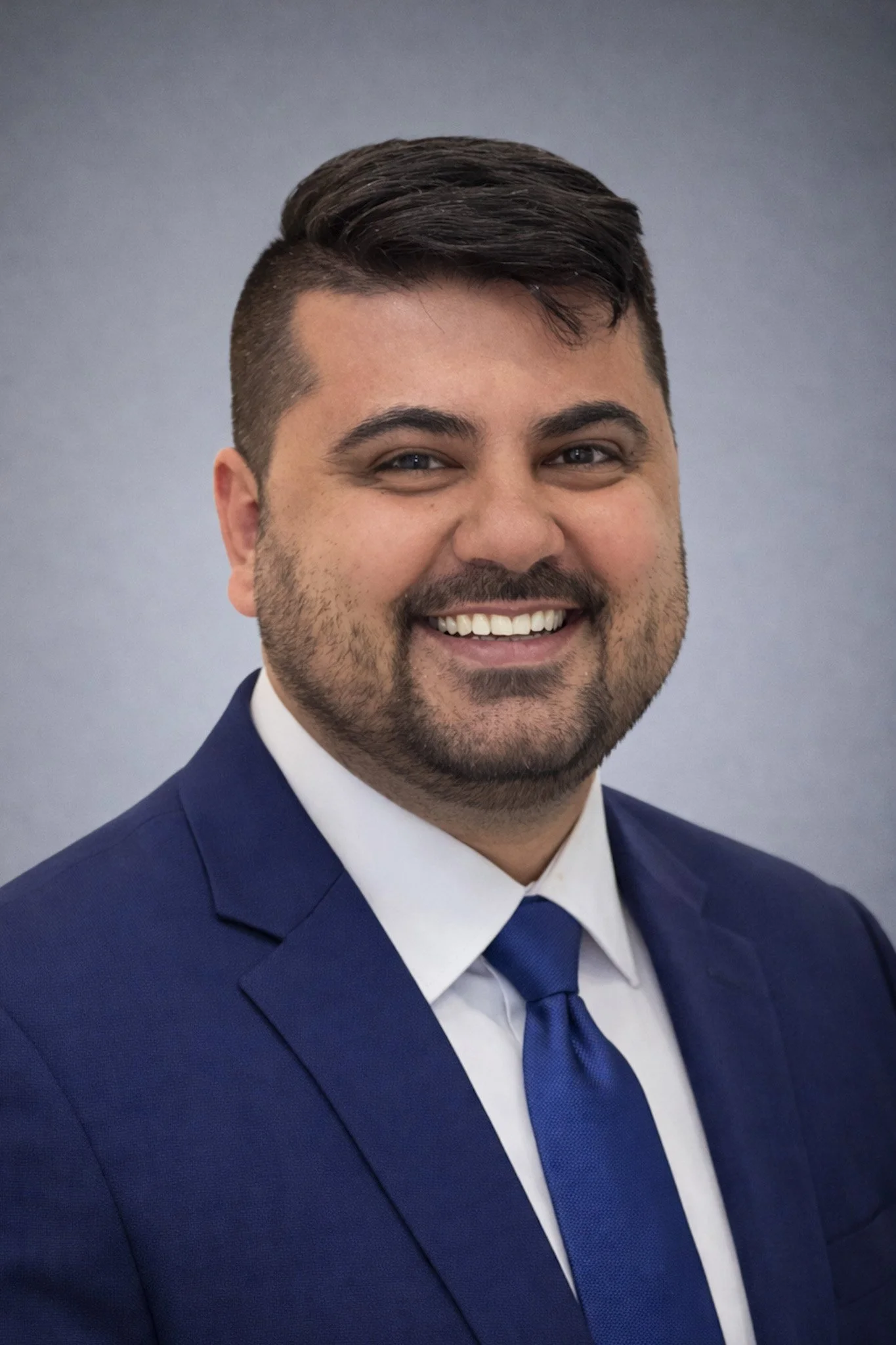
Narek Mirzoyan
Vahe Mirzoyan
Narek Mirzoyan is a Regulated Canadian Immigration Consultant (RCIC#R1005184) in good standing with the College of Immigration and Citizenship Consultants, a proud member of the Canadian Association Of Professional Immigration Consultants (CAPIC), a Licensed Paralegal (P12490) with the Law Society of Ontario, the founder of Mirzoyan Canadian Immigration Services Inc. and an immigrated to Canada himself. That experience shapes how he explains each step to clients.

Vahe Mirzoyan is a seasoned Regulated Canadian Immigration Consultant (RCIC#R514223) with over a decade of dedicated experience working with individuals, corporations, and institutions on the full spectrum of Canadian immigration law. With a career built on precision, integrity, and an unwavering commitment to client success, Vahe has established himself as a trusted authority in Canadian immigration.
Start Your Post-Graduation Work Permit File Today
A clean PGWP file, filed inside the 180-day window with the field of study and the program both confirmed eligible, moves through IRCC on the published standard for its route. A late or ineligible file does not just cost months. It can cost the one-time permit itself, because IRCC issues the PGWP only once. The tightened field-of-study and program-eligibility screens reward confirming eligibility before the clock runs, not after. Book a free 15-minute consultation with our Canadian immigration representatives, or call 1-888-636-2122. Every consultation is with Narek Mirzoyan, RCIC # R1005184, or Vahe Mirzoyan, RCIC # R514223. Your file will not be routed through an intake desk.
This page is general information about the Canadian post-graduation work permit and does not constitute legal or immigration advice. IRCC rules, fees, eligibility lists, and processing times change. Individual circumstances vary. For advice tailored to your situation, book a consultation with a licensed Regulated Canadian Immigration Consultant.