

Visitor Visa Toronto
Visitor visa Toronto hosts file into a 2026 system where the invitation letter carries almost no weight on its own, and the decision turns on whether a guest abroad has proven they will go home. An officer applies the leave-Canada test in section 179 of the Regulations, not the strength of the welcome. Most of these guests land at Toronto Pearson, the busiest port of entry in the country, yet the file is judged at a visa office overseas long before that. Mirzoyan Immigration is a licensed RCIC practice that handles Toronto-area visitor visa files end to end, serving hosts across the city in person, online, or by phone. The firm drafts the invitation letter, builds the ties-to-home evidence, prepares IMM 5257, IMM 5645, and IMM 5476, files through the IRCC Secure Account, and tracks the file to a decision. Service in English, Russian, and Armenian, on a flat fee. Book a Toronto visitor visa consultation to start.
Last reviewed by Narek Mirzoyan, RCIC # R1005184, on 2026-06-25.
Is a Toronto Visitor Visa Consultant Right for You?
Many Toronto hosts can submit a clean visitor visa themselves, so the reason to delegate is risk, not form-filling. A weak file costs a refusal that sits on record and makes the next application harder. This service fits the host who wants a licensed Toronto RCIC to build the file and pressure-test it against the leave-Canada standard before it reaches a visa officer. An RCIC intake at Mirzoyan Immigration makes sense if any of these describes your situation:
- You are a Canadian citizen, permanent resident, work-permit holder, or student in the GTA inviting family or a contact from a visa-required country.
- Your guest has a prior visa refusal, a prior overstay, or a thin ties-to-home record that needs careful presentation.
- You are also pursuing permanent residence for the same person and need the dual-intent risk handled, not ignored.
- You promise full financial support and want the invitation letter to match your real income on file.
- You want the file handled in English, Russian, or Armenian, for you or for your guest abroad.
For parents and grandparents planning a long stay rather than a short visit, read the related-services section: the Super Visa is usually the stronger pathway.

What Mirzoyan Immigration Handles for Your Toronto Visitor Visa
Mirzoyan Immigration runs the visitor visa file from preparation through portal submission and follow-up. The firm drafts the IRCC-compliant invitation letter on your letterhead, then prepares IMM 5257 (Application for a Temporary Resident Visa), IMM 5645 (Family Information), and IMM 5476 (Use of a Representative). It assembles your guest's ties-to-home evidence, reviews your proof of host income against the support you promise, and submits the package through the IRCC Secure Account. For a visa-exempt national flying to Canada, the firm runs an Electronic Travel Authorization (eTA) assessment instead, which matters most where your guest has a prior refusal or a criminal-history question. Where you are also pursuing permanent residence for the same person, the firm structures the file to address dual intent. You supply the source records: passport scans, proof of your own status, your income documentation, and your guest's ties evidence. To hire help at the national level, see what a visitor visa consultant handles across the full file.
How the Visitor Visa Process Works for a Toronto HosT
The file moves through five steps, and step one must clear before any form is drafted, because hosts of visa-exempt nationals routinely build full visitor visa packages when only an eTA is needed.
-
The document your guest needs depends on their citizenship, passport or other travel document, status and how they will travel to Canada. Some travellers need a visitor visa, some need an eTA for air travel, and others are exempt from both. Provide these details so Mirzoyan Immigration Services can check the applicable requirements. Use IRCC’s entry-requirements tool before applying or booking travel.
-
The host writes the invitation letter with truthful details about the relationship, purpose and length of the visit, accommodation, who will pay the expenses and the guest’s planned departure. Include the host’s contact and status information and the supporting documents required for the application. Mirzoyan Immigration Services can guide the host and review the letter for accuracy and consistency with the rest of the file. An invitation letter does not guarantee a visa. Follow IRCC’s invitation-letter guidance.
-
Your guest assembles employment confirmation, property or rental records, family documentation, and prior travel history. This is the substance the officer weighs against the leave-Canada test, so a thin file here is where most refusals start.
-
The firm drafts and reviews IMM 5257, IMM 5645, and IMM 5476. Your guest gives fingerprints and a photo at a Visa Application Centre in their country of residence after the biometrics instruction letter arrives.
-
The licensed RCIC submits the file under a signed representative authorization, pays the government fees, and follows it to a decision. Your guest then prepares for the port-of-entry inspection at Toronto Pearson, where a CBSA officer sets the actual length of stay, by default up to six months.
Documents You Will Need for Your Toronto Visitor Visa Application
The file pulls documents from two sources, and substitutions weaken it, because each item proves a different point to the officer (IRCC visitor visa document guidance):
From you, the Toronto host: - Proof of status in Canada: citizenship certificate or passport, PR card, or your current work or study permit. Establishes your standing to invite. - Invitation letter on your letterhead, drafted by Mirzoyan Immigration and signed by you. Sets out the visit and your financial undertaking. - Proof of host income: most recent Notice of Assessment, a recent T4, or an employment-confirmation letter on company letterhead. Backs the support the letter promises. - Proof of relationship: birth certificate, marriage certificate, or documentation of the personal or business connection. Shows the visit is genuine. - Proof of GTA address (lease or utility bill) corroborating the accommodation offered.
From your guest, the applicant: - Valid passport with at least six months of remaining validity, ideally longer. Anchors identity and the visa counterfoil. - Recent digital photo meeting IRCC photo specifications. - Ties-to-home evidence: employment letter, property records, and family documentation. The core of the leave-Canada case. - Travel history, including prior visa stamps or entry records. Read as evidence of compliance on past trips. - Biometrics receipt issued after the Visa Application Centre appointment. - Police certificate from the country of residence, only if the visa office requests one.

Typical Toronto Visitor Visa Timeline and Government Fees
Visitor visa processing turns on your guest's visa office, not on your Toronto address, so a file in one country can clear in weeks while the same documents take months in another. The only reliable figure is the IRCC processing-times tool for your guest's visa office on submission day. Add two to four weeks of preparation before submission for invitation-letter drafting, ties-evidence assembly, and form review. Plan against the visit date, not the application date, and build in transit for the biometrics appointment once the instruction letter arrives.
The government fees are set by IRCC, not by Mirzoyan Immigration. The visitor visa application fee has historically been 100 dollars per person, and biometrics have run 85 dollars per person or 170 dollars per family of two or more. Where an eTA applies instead, the fee has historically been $7 dollars. The current schedule sits on the IRCC fee list. Mirzoyan Immigration's professional fee is a separate flat fee, quoted in writing after your consultation, with no hourly billing and no published fee menu, because the scope of each file is different. See our flat-fee structure, then book a consultation for a quote.
Common Mistakes That Lead to Toronto Visitor Visa Refusals
In my consultations with Toronto-area hosts, the same refusal patterns repeat, and none of them is about whether the guest is a real visitor. Each is about a file that does not satisfy the leave-Canada test the way an officer reads it. Here are the four that bite most often.
The first is weak ties-to-home-country evidence. The applicant submits a thin set of personal documents, and the officer cannot see what pulls this person back, so the file is refused under the leave-Canada test. Self-employed applicants and unmarried young applicants without property sit at higher risk, because the standard employment-and-family proof is thinner for them. They need a deliberately built ties file, not a single letter.
The second is dual intent presented as a simple visit. You may be mid-sponsorship or mid-Express Entry for the same guest, and the application either hides the parallel permanent residence file or, worse, reads as an intention to stay rather than visit. The law permits dual intent, but the file has to satisfy the officer that the applicant will leave if the permanent residence application is refused. Presented as an ordinary tourist visit with a pending sponsorship surfacing in the system, it draws a refusal. The dual-intent file is a strategy question, not a paperwork question.
The third is an invitation letter that does not match host financial reality. The host promises full support but submits no income documentation, or the income on file does not cover the obligation the letter describes. The officer reads the gap between the promise and the Notice of Assessment as a weakness and refuses. The letter and the host's proof of funds have to tell one consistent story.
The fourth is an undisclosed prior refusal or overstay. IMM 5257 asks directly about prior refusals from any country and prior overstays in Canada, and applicants forget a US B-2 refusal from years ago or a few weeks of overstay. IRCC's system flags the omission, a misrepresentation finding under section 40 of IRPA can follow, and that carries a five-year inadmissibility, not a simple refusal. Disclose every prior refusal and overstay, including one a guest assumes is too old to matter.

Ready to start your visitor visa application in Toronto?
Reach a Licensed Immigration consultant Today
Book a free 15-minute FREE assessment call, or call 1-888-636-2122.
Every consultation is with Narek Mirzoyan, RCIC # R1005184, or Vahe Mirzoyan, RCIC # R514223. Not an intake coordinator.
Why Toronto Hosts Choose Mirzoyan Immigration for Visitor Visa Files
Toronto hosts ask for three things on a visitor visa file: licensed handling, a language match, and a firm that stays reachable when the visa office goes quiet. Mirzoyan Immigration is led by two licensed Regulated Canadian Immigration Consultants, Narek Mirzoyan, RCIC # R1005184 and Paralegal LSO # P12490, and Vahe Mirzoyan, RCIC # R514223 and Paralegal LSO # P11602, both on the College of Immigration and Citizenship Consultants public register. The firm serves Toronto hosts Canada-wide, in person, online, or by phone, in English, Russian, and Armenian, on a transparent flat fee that is never billed by the hour. That language coverage matters here, because GTA host families frequently bring parents, siblings, and contacts from Armenia, Russia, Ukraine, Iran, and other visa-required countries where the source-language document trail is heavy. Two frameworks govern every visitor visa file.
One on One Advisory. When you hire Mirzoyan Immigration, your questions go directly to a licensed RCIC. Not an intake coordinator. Not a paralegal assistant. The consultant who builds your file is the consultant who answers your messages.
The Mirzoyan Methodology. Every file moves through six stages before IRCC sees it: risk diagnosis, evidence mapping, document verification, consistency audit, submission, and IRCC response management. Each stage targets a specific class of officer-flag pattern. On a Toronto visitor visa file, the risk-diagnosis stage surfaces a thin ties-to-home profile or a hidden dual-intent exposure before drafting starts, and the consistency-audit stage reconciles the support promised in the invitation letter against the host's actual income on the Notice of Assessment and T4, so the letter and the funds tell one story to the officer. That reconciliation is where most ties-and-funds refusals start, and it is where the firm catches them.
Why a licensed RCIC matters. A Regulated Canadian Immigration Consultant is the only non-lawyer practitioner IRCC authorizes to represent applicants. The CICC sets the conduct code, runs a public complaints process, and keeps the register of every active licence. An unlicensed "consultant" sits outside that framework, so if your file is mishandled you have no recourse through the regulator, and IRCC treats the application as if your guest filed it themselves. Verify any practitioner on the CICC register before you sign anything. Call 1-888-636-2122 to reach the firm directly.

Why Toronto Clients Choose Mirzoyan Immigration
One on One Advisory. When you hire Mirzoyan Immigration, your questions go directly to a licensed practitioner. Not an intake coordinator. Not a paralegal assistant. The person who reviews your document is the person who notarizes it and answers your questions about it.
The Mirzoyan Methodology. Every file moves through six stages before IRCC sees it: Risk diagnosis, Evidence mapping, document verification, consistency audit, submission; and IRCC response management. Each stage catches a specific officer-flag pattern.
Service in English, Russian, and Armenian.
A transparent flat fee, never billed by the hour.
Canada-wide service, in person, online, or by phone.
Read more on our Google Business Profile, rated 5.0 from 261 reviews by Mirzoyan Immigration clients.
Frequently Asked Questions About Visitor Visas in Toronto
-
Mirzoyan Immigration charges a transparent flat fee for a visitor visa file in Toronto, quoted after your consultation. The fee covers invitation-letter drafting, ties-to-home evidence assembly, IMM 5257, IMM 5645, and IMM 5476 preparation, IRCC Portal submission, and follow-up to decision. It is separate from the IRCC government fees, which have historically run 100 dollars per person plus 85 dollars for biometrics. Book a consultation for a quote on your file.
-
Visitor visa processing time depends on the application category and the country from which your guest applies. A host’s or consultant’s Toronto address does not establish a separate processing timeline. Use IRCC’s processing-times tool for the relevant application and country. The figures are estimates, not a guaranteed decision date. Allow additional time to prepare the invitation letter and supporting documents, and plan around the intended visit without assuming approval by a fixed date.
-
The firm drafts the invitation letter on your behalf, built from the IRCC-recommended fields: your status in Canada, your address, your relationship to the visitor, the purpose and duration of the visit, the accommodation offered, and your financial undertaking. You sign it and provide supporting income documentation. Self-drafted letters that promise full support but do not match the host's income on file are a common quiet weakness, so the firm treats the letter as part of its product, not your homework.
-
IRCC issues multi-entry visas by default, valid up to ten years and capped at the passport's expiry date, while single-entry visas are issued in narrower cases. For parents and grandparents specifically, the Super Visa is usually the stronger fit, because it allows stays of up to several years per entry and is valid for up to ten years. The related-services section below carries the cross-link to the Super Visa program.
-
No. Mirzoyan Immigration serves Toronto hosts in person, online, or by phone, and the full file can be handled remotely. Consultations run on Zoom or Microsoft Teams, the use-of-representative form is signed electronically, and documents are exchanged through a secure portal. The choice is yours: meet in person if you prefer, or complete the entire application without leaving home. Service is available in English, Russian, and Armenian.

Next Steps for Your Toronto Visitor Visa Application
A visitor visa file takes two to four weeks of preparation before submission, and the visa-office wait that follows depends entirely on your guest's country of residence. The most expensive version of this file is the one that goes in with a thin ties record or an invitation letter the host's income does not support, because a refusal sits on record and makes the next attempt harder. If your guest has a date in mind, a wedding, a graduation, or a family event, starting now sets a realistic timeline against it rather than against the application date. Book a consultation with our Canadian immigration representatives, or call 1-888-636-2122. Every consultation is with Narek Mirzoyan, RCIC # R1005184, or Vahe Mirzoyan, RCIC # R514223.
Trusted Toronto Immigration Consultants
Trusted Toronto immigration team helping individuals and families with spousal sponsorships, work permits, visitor visas, and permanent residence.
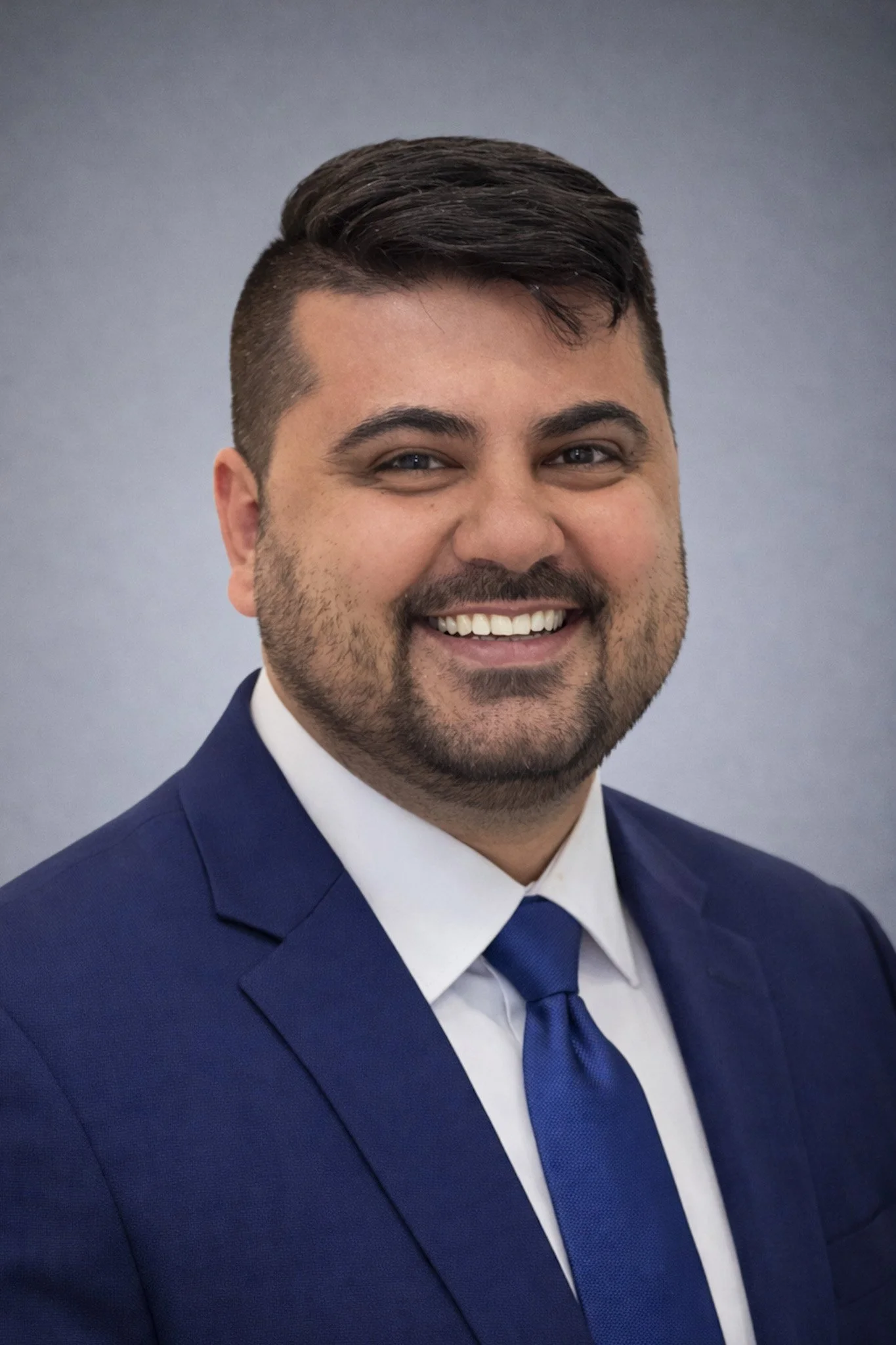
Narek Mirzoyan
Vahe Mirzoyan

Narek Mirzoyan is a Regulated Canadian Immigration Consultant (RCIC#R1005184) in good standing with the College of Immigration and Citizenship Consultants, a proud member of the Canadian Association Of Professional Immigration Consultants (CAPIC), a Licensed Paralegal (P12490) with the Law Society of Ontario, the founder of Mirzoyan Canadian Immigration Services Inc. and an immigrated to Canada himself. That experience shapes how he explains each step to clients.

Vahe Mirzoyan is a seasoned Regulated Canadian Immigration Consultant (RCIC#R514223) with over a decade of dedicated experience working with individuals, corporations, and institutions on the full spectrum of Canadian immigration law. With a career built on precision, integrity, and an unwavering commitment to client success, Vahe has established himself as a trusted authority in Canadian immigration.
This page is general information about the Canadian visitor visa in Toronto and does not constitute legal or immigration advice. Individual circumstances vary, IRCC rules and processing times change, and the right strategy on a visitor visa file turns on facts specific to you and your guest. For advice on your file, book a consultation with a licensed Regulated Canadian Immigration Consultant at Mirzoyan Immigration.