

Verification of Status Canada
A Verification of Status in Canada is the paper record that proves where you stand with IRCC, and you have a legal right to see what sits behind your file. Two different documents get confused under that phrase, so this guide separates them cleanly. One is the official Verification of Status (VoS) letter, requested on form IMM 5009, which replaces a lost landing record. The other is your GCMS notes, the officer's internal working file, requested through ATIP (Access to Information and Privacy). A GCMS notes request costs $5 for an Access request, or nothing under the Privacy Act for your own records, and IRCC has 30 calendar days to respond. This topic sits inside our broader document services in Canada work. The page shows you which document you actually need, how to file the request, the newer secure-account route, and how a practitioner reads the notes to unstick a stalled or refused file.
Last reviewed By Narek Mirzoyan, RCIC # R1005184, on 2026-06-26
TL;DR
The phrase "Verification of Status" covers two separate things. A Verification of Status (VoS) letter, requested on IMM 5009, replaces a lost Confirmation of Permanent Residence or Record of Landing. Your GCMS notes, requested through ATIP, are the officer's working file: remarks, hold codes, and document requests. An Access to Information request costs $5; a Privacy Act request for your own records is free, with a 30-day legislated response window. Since July 29, 2025, IRCC also attaches officer notes to many temporary-resident refusal letters through your secure account, so an ATIP request is not always needed. The notes are the single best tool for diagnosing why a file stalled or what drove a refusal.
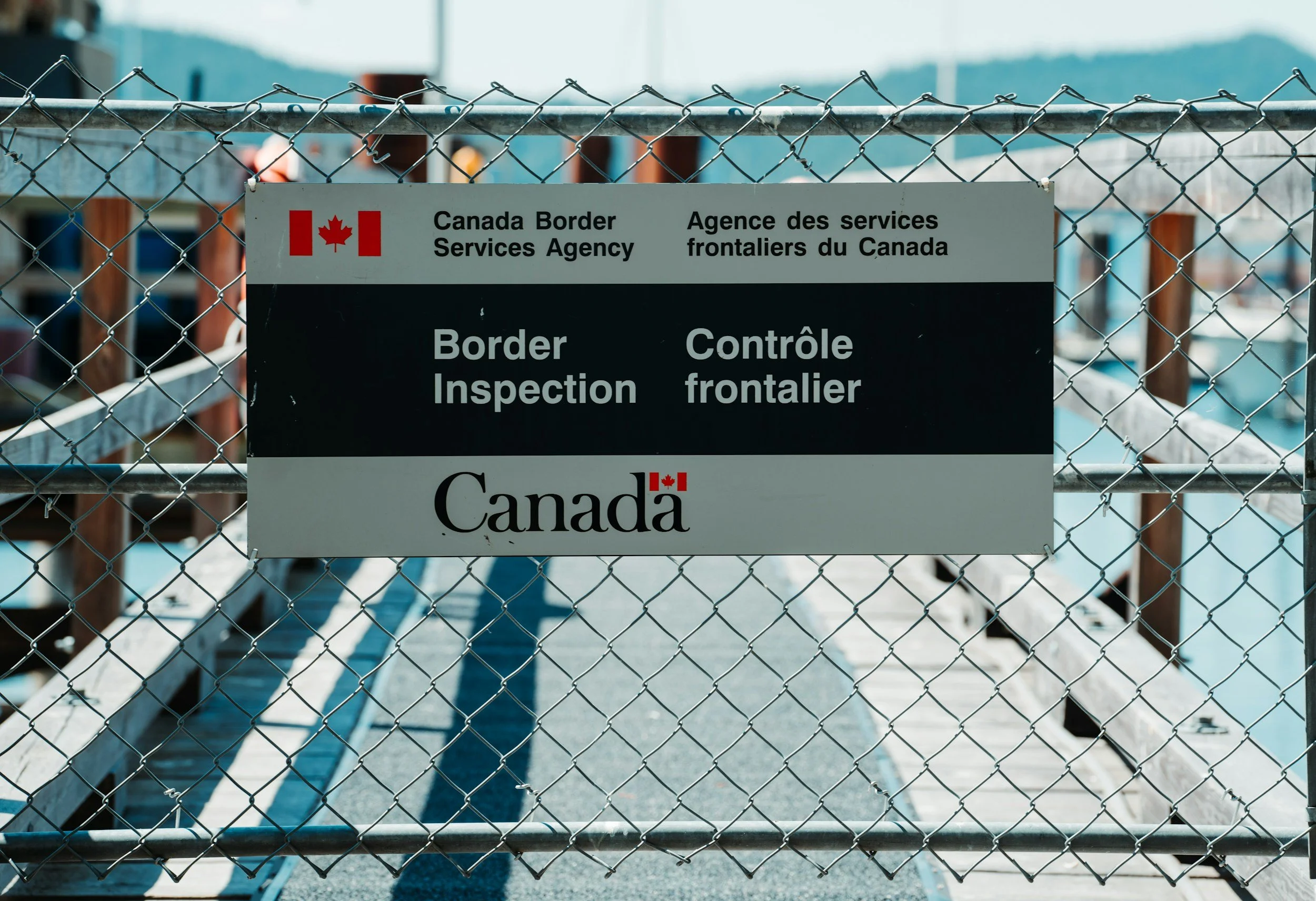
Verification of Status vs GCMS notes: what is the difference?
Are a Verification of Status and GCMS notes the same thing?
No. They are two different documents with two different request routes. A Verification of Status (VoS) is an official IRCC letter confirming your status or landing history, and it runs on form IMM 5009. GCMS notes are the officer's internal working record of a specific application, and they run through ATIP. One proves where you stand. The other shows what the officer was thinking.
People merge the two because both answer a "what does IRCC have on me" question. The VoS is the simpler one. You ask IRCC to confirm, in writing, the facts in its system: your date of first entry, your immigration category, and the date you became a permanent resident.
Here is the part that trips people up. A VoS is often the only way to reconstruct a landing history when the original paper is gone. IRCC does not reissue a lost Confirmation of Permanent Residence (COPR) or the older Record of Landing (IMM 1000). It sends a Verification of Status instead, a plain-paper letter carrying the same landing information. That full lost-document process, including the IMM 5009 form and its current fee, lives in our replace lost immigration documents in Canada guide. It is a different request from the ATIP pull this page covers.
So which do you need? For a clean status question, a citizenship application that needs a landing date, or a lost COPR, the IMM 5009 VoS is the right document. For a "why is my file stuck" or "why was I refused" question, GCMS notes are. GCMS stands for the Global Case Management System, the database IRCC uses to process every application. The notes are the part you can request. They are written by officers, for officers, in shorthand and code, which is why reading them takes practice. The rest of this guide focuses on the GCMS notes, because that is the request most readers landing here actually need.
How to request GCMS notes through ATIP: step by step
What is the actual process to get my GCMS notes?
You file an ATIP request to Immigration, Refugees and Citizenship Canada, identify yourself and your file, pay the $5 fee for an Access request (Privacy requests are free), and wait the 30-day legislated window for a PDF. The steps below walk through it. None of this requires a lawyer, though a representative can file for you.
Step 1: Check your secure account first. If your refusal is recent, sign in to your IRCC secure account and open the refusal letter before filing anything. Since July 29, 2025, IRCC attaches officer notes to many temporary-resident refusals. If the notes are already there, you may skip the request entirely.
Step 2: Confirm you are eligible to file directly. You can submit your own request only if you are a Canadian citizen, a permanent resident, or a person physically present in Canada. This is the first trap. An applicant waiting abroad on a stalled file cannot file alone.
Step 3: Choose the request stream. Request your own personal information under the Privacy Act, which carries no fee. Choose the Access to Information Act stream, the $5 stream, when the records sought are not purely your own personal information. For your own GCMS notes, the Privacy stream usually fits.
Step 4: Open the ATIP Online Request portal. Use the ATIP Online Request portal on canada.ca and select IRCC as the institution. The online portal is faster than the paper Access to Information Request form.
Step 5: Enter your identifiers. Provide your full legal name, date of birth, your UCI (Unique Client Identifier) where you have one, the application number, and the program. Attach a copy of your photo identity document. A mismatch between the name on the form and the name on file is a common reason a request comes back unprocessed.
Step 6: Pay the fee and keep the confirmation. Pay $5 for an Access to Information request. A Privacy Act request for your own information is free. Keep the confirmation number the portal issues.
Step 7: Wait, then read. IRCC has 30 calendar days to respond, though it can claim an extension for a large or complex file. You receive a PDF. Read the officer remarks, hold codes, and outstanding requests against your current application status.
If your file is genuinely stuck rather than refused, the notes are also the tool for diagnosing whether a category problem is in play. A reader who let a permit lapse, for instance, is often looking at restoration of status in Canada rather than a simple delay, and the notes confirm which.
The new route: officer notes in your IRCC secure account
Can I get the officer notes without an ATIP request now?
Often, yes, if your file is a recent temporary-resident refusal. Since July 29, 2025, IRCC has attached officer decision notes directly to refusal letters for study permits, work permits, temporary resident visas, and visitor records. The notes arrive in your secure account with the refusal. No separate request, no $5, no 30-day wait.
This changed the playbook for refused temporary-resident applicants. The baseline used to be simple: every refused applicant filed an ATIP request and waited a month for the reasoning. The newer rule is narrower than the headlines suggest. The proactive notes cover four temporary-resident categories, and they reach you through the secure account tied to that application.
Here is where the rule still leaves a gap. The proactive release does not cover permanent-residence decisions, it does not reach back to older refusals issued before the policy, and it currently excludes files submitted through the new IRCC Portal. A refused spousal-sponsorship applicant, an Express Entry refusal, or a PR file still needs the full ATIP pull. So does anyone whose refusal predates July 2025.
Consider a recurring pattern we see. A refused study-permit applicant logs into the secure account, finds the officer notes already attached to the letter, and reads that the officer doubted the study plan. That reader can move straight to the reapply-or-challenge decision without waiting for ATIP. A refused PR applicant in the same week has no such shortcut, and orders the notes the day the refusal lands. The route depends entirely on the application type and the channel it was filed through.
Who can file and what it costs
Can anyone request GCMS notes, and what is the real cost?
Only a Canadian citizen, a permanent resident, or a person inside Canada can file an ATIP request directly. The cost is $5 for an Access request and nothing for a Privacy request covering your own records. Applicants outside Canada need a Canadian-based requester or an authorized representative to submit on their behalf with signed consent.
The baseline rule is the eligibility line above. The catch is who that rule shuts out. The people who most need their GCMS notes are often refused applicants outside Canada, and they are exactly the group barred from filing alone. A refused visitor in Lagos or a refused student in Mumbai cannot pull their own file. They must appoint a Canadian citizen, a permanent resident, or a licensed representative to file the request and sign the consent.
The edge case is consent itself. A representative filing for a client must include signed consent authorizing release of personal information. Leave the consent out, and the request is returned without processing, which burns weeks you may not have if a Federal Court deadline is running. Build the consent into the request from day one.

BOOK A FILE ASSESSMENT MEETING
Reach a Licensed Immigration consultant Today
Book a free 15-minute FREE assessment call, or call 1-888-636-2122.
Every consultation is with Narek Mirzoyan, RCIC # R1005184, or Vahe Mirzoyan, RCIC # R514223. Not an intake coordinator.
The Internal Logic of an IRCC Officer
What is an officer actually writing in my GCMS file?
An officer uses GCMS as a live worksheet. Every eligibility check, admissibility note, security-screening status, and document request is logged with a date and an officer code. The notes are written in compressed, jargon-heavy language because they are an internal record, not a letter to you. When you read them, you are reading the officer's reasoning in real time.
The baseline is that GCMS holds the decision trail. What the trail tells you that the decision letter does not is the real value. A refusal letter gives you template paragraphs. The notes give you the specific sentence the officer wrote, for example "PA's stated funds inconsistent with declared employment income" or "travel history insufficient to establish ties." That sentence is the real refusal. The letter is the summary.
Officers also log hold and alert codes. A background or security-screening hold reads very differently from a "ready for decision" entry sitting untouched for 90 days. The first means wait. The second is evidence of a stalled file you can escalate. Reading the difference is the whole point of pulling the notes.
The edge case is timing your read against your deadline. Consider a recurring pattern we see: a refused study-permit applicant who orders GCMS notes, finds the officer doubted the study plan, and realizes the file would be stronger on reapplication than on judicial review. The notes drive the strategic choice. For a temporary-resident refusal, remember that those notes may already be sitting in your secure account, which is faster than the $5 ATIP pull for the same reasoning.
Strategic Trade-off Matrix
Should I file ATIP, send an IRCC Web Form, or ask my MP?
When a file goes quiet, three routes give you information: an ATIP request for GCMS notes, an IRCC Web Form inquiry, and a Member of Parliament referral. They are not interchangeable. One gives you the officer's reasoning, one gives you a status line, and one applies pressure. The matrix below compares them on the dimensions that matter when a deadline is running.
In practice, you run these in sequence, not in isolation. Start with a Web Form inquiry when you are only slightly past the published processing time. Order GCMS notes when you need the reasoning, when a refusal has landed, or when a Federal Court clock is ticking. Use an MP referral when the file is well past the published time and the notes show no movement. The notes are the only one of the three that tells you why.
| Comparison point | ATIP request (GCMS notes) | IRCC Web Form inquiry | MP referral |
|---|---|---|---|
| Strategic risk | Lowest. Runs through a separate division. No effect on the deciding officer or the queue. | Low. A routine status question. No effect on processing. | Low, but use sparingly. Best reserved for files clearly past the published time. |
| Appeal or challenge value | Highest. Gives the officer reasoning you need for a judicial review or a rebuilt reapplication. | Low. Returns a status line, not the reasoning behind a decision. | Low. Produces a status update, not the decision record. |
| Cost | $5 for an Access request; free under the Privacy Act for your own records. | Free. | Free. |
| Response timeline | 30 calendar days legislated, extension possible for complex files. | Typically a few weeks; no statutory deadline. | Often 4 to 8 weeks through the constituency office. |

How Mirzoyan Immigration uses GCMS notes to diagnose a stalled or refused file
What does a practitioner do with the notes that I cannot?
The notes arrive as a dense PDF of codes and shorthand. A practitioner reads them against the legislation and against hundreds of prior files, then translates the officer's working record into a decision: wait, escalate, reapply, or litigate. The value is in the diagnosis, not the document.
The baseline is that anyone can order their own notes. What changes the picture is that the notes are written to be read by officers, not applicants. A line like "A39 / A40 considered, no finding" means the officer weighed an inadmissibility for misrepresentation and chose not to make one. The A40 entry points to section 40 of the Immigration and Refugee Protection Act, the misrepresentation rule. A reader who misses that a misrepresentation finding carries a five-year ban skims past the most important sentence in the file. I have read GCMS notes for hundreds of clients, and the recurring pattern is that the entry the client overlooked is the entry that decides their next step.
The edge case is the refused file with a short litigation window. Consider a recurring pattern we see: a refused applicant who waits two months to order GCMS notes, gets the PDF, and only then learns the Federal Court deadline to challenge the refusal has nearly run. Order the notes the week the refusal lands, not the month after. The diagnosis can also reroute the file entirely. A worker whose notes show the underlying status problem is really a category issue may belong in change of status in Canada, not in a challenge, and the notes are what surface that.
Red Flags & Procedural Fairness Letters (PFL)
What request mistakes get an ATIP file returned, and what do the notes warn about?
Two failure patterns dominate. The first is the request itself coming back unprocessed because of an identity or consent gap. The second is what the notes reveal: a pending Procedural Fairness Letter (PFL), the warning shot an officer fires before a refusal. Reading a PFL flag early is the difference between answering it and missing it.
Trigger 1: identity mismatch or missing consent returns the request. ATIP processing staff match the name and identifiers on your request against the file. A request filed under a married name when the file is in a maiden name, or a representative request without signed consent, is returned without processing. The failure pattern is silent. You do not get a refusal, you get weeks of nothing, then a return. On a file with a live Federal Court deadline, those lost weeks can be fatal to the challenge.
Trigger 2: the GCMS notes show a PFL is pending or was sent. A Procedural Fairness Letter gives you a short, fixed window to answer an officer's concern before a decision. The failure pattern: the PFL goes to an old address or a junk folder, the window closes unanswered, and the officer refuses on the concern you never saw. GCMS notes often show the PFL in the record before the formal letter reaches you. Pulling the notes can surface a fairness concern while there is still time to respond.
Trigger 3: the notes flag an inconsistency the officer is weighing under section 40. The most damaging entry in any GCMS file is a misrepresentation concern. An officer who logs that your declared funds, employment, or travel history conflicts with other evidence is building toward a section 40 finding, which carries a five-year inadmissibility. The failure pattern is reapplying before reading the notes. A second application that repeats the same inconsistency confirms the officer's concern. Read the notes first, then decide.
Key Takeaways
"Verification of Status" covers two documents. A Verification of Status (VoS) letter on IMM 5009 replaces a lost COPR or Record of Landing. GCMS notes through ATIP are the officer's working file.
An Access to Information request costs $5; a Privacy Act request for your own records is free. IRCC has 30 calendar days to respond.
Since July 29, 2025, IRCC attaches officer notes to many temporary-resident refusal letters in your secure account, so an ATIP request is not always needed. PR files, older refusals, and IRCC Portal files still need ATIP.
You can file ATIP directly only as a Canadian citizen, a permanent resident, or a person inside Canada. Applicants abroad need a Canadian requester or representative with signed consent.
Mirzoyan Immigration orders and decodes GCMS notes as part of a file diagnosis, identifies the precise officer concern, and maps whether reapplying or challenging the decision is the stronger move.
Frequently Asked Questions
-
They answer different questions and travel different routes. A Verification of Status (VoS) is an official IRCC letter that confirms your status or landing record, and it replaces a lost Confirmation of Permanent Residence or Record of Landing. You request it on form IMM 5009. GCMS notes are the officer's internal working file: remarks, hold codes, and document requests. You request those through ATIP, not IMM 5009.
-
An Access to Information request costs $5. A Privacy Act request for your own personal information is free. IRCC has 30 calendar days to respond under the legislation, though it can claim an extension for a large or complex file. Most GCMS requests return a PDF within that 30-day window.
-
Sometimes not. Since July 29, 2025, IRCC attaches officer decision notes to refusal letters for study permits, work permits, temporary resident visas, and visitor records, delivered through your secure account. That covers many temporary-resident refusals. A separate ATIP request is still needed for permanent-residence files, for older decisions, and for files submitted through the new IRCC Portal, which are not yet covered.
-
You can file directly if you are a Canadian citizen, a permanent resident, or a person physically present in Canada. Applicants outside Canada cannot file on their own. A Canadian citizen, a permanent resident, or an authorized representative must submit the request for them and provide signed written consent on the form.
-
No. An ATIP request runs through a separate IRCC division from the officers deciding your file. It does not pause processing, move you down the queue, or signal anything to the deciding officer. Requesting your own notes is a legal right under the Access to Information Act and the Privacy Act.
-
Yes, and a practitioner usually reads them first. The notes show the exact concern that drove the refusal, which lets you decide between reapplying with a rebuilt package and filing for judicial review at the Federal Court. Federal Court deadlines are short, so order the notes early. A licensed RCIC can read the reasoning and map the stronger route.
Conclusion
A Verification of Status and your GCMS notes are not bureaucratic trivia. They are the clearest window you have into how IRCC is handling your file. If your record is lost, the IMM 5009 VoS letter reconstructs it. If your file is stalled or refused, the GCMS notes carry the officer's real reasoning, and pulling them costs $5 and about 30 days, or nothing at all if the notes are already sitting in your secure account.
If your notes read like code, or a Federal Court deadline is running, do not guess. Book a consultation with Mirzoyan Immigration. Our RCICs order and decode GCMS notes, identify the precise concern in the file, and tell you the stronger next move before a deadline closes the door. Book a consultation, or call 1-888-636-2122.
Disclaimer: This page provides general information about requesting a Verification of Status and GCMS notes through ATIP in Canada. It is not legal advice and does not create a consultant-client relationship. Immigration rules, fees, and processing timelines change frequently. Verify current information directly with Immigration, Refugees and Citizenship Canada or book a consultation with a licensed RCIC before making decisions about your file.